
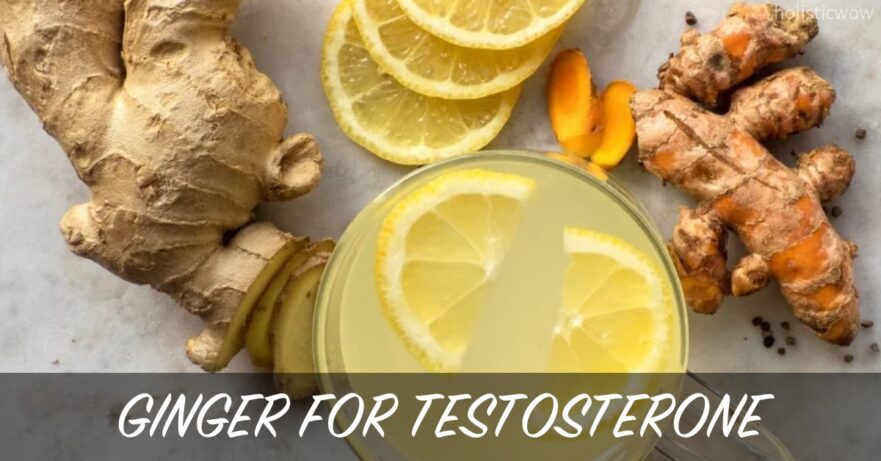
Ginger for testosterone is gaining attention as studies suggest that this popular spice may help boost testosterone production, especially under conditions of oxidative stress or poor metabolic health. While animal research highlights ginger’s potential to support hormone levels through its antioxidant, anti-inflammatory, and circulatory benefits, more clinical studies are needed to confirm these effects in humans.
Key Takeaways
- 🧑🔬 Ginger Supports Testosterone (in Animals): Animal studies show that ginger can help boost testosterone by increasing luteinizing hormone (LH) and providing antioxidant support, though strong evidence in humans is still lacking.
- 🌱 Antioxidant & Anti-Inflammatory Effects: Ginger’s natural antioxidants and anti-inflammatory properties may protect reproductive organs from damage and help create a healthier environment for hormone production.
- 💓 Improved Circulation and Hormone Function: Compounds in ginger can improve blood flow to the reproductive organs, supporting better oxygen and nutrient delivery needed for healthy testosterone levels.
- 🔬 Human Research Needed: While results in animal models are promising, more clinical studies in people are required to confirm ginger’s role in naturally boosting testosterone and supporting male health.
What Is the Connection Between Ginger and Testosterone?
Research suggests a potential link between ginger and testosterone production, mainly based on in vivo studies.
These studies indicate that ginger supplementation can enhance testosterone levels, especially in conditions involving oxidative stress in animal studies.
Possible mechanisms include increasing luteinizing hormone (LH) production, boosting cholesterol levels in the testes—both of which are needed for testosterone synthesis—and reducing oxidative stress.
By addressing oxidative stress, ginger may help protect reproductive organs and support healthier endocrine balance.
However, while these findings are promising in animals, the effects of ginger on testosterone in humans remain unconfirmed and require additional clinical studies.
Overall, ginger shows potential as a natural way to support testosterone production, offering antioxidant support and potential hormone-regulating benefits, but more research in humans is needed to better understand its effectiveness.
How Does Ginger Affect Testosterone Production?
Ginger can help support testosterone production by increasing levels of luteinizing hormone (LH), which plays a key role in signaling the testes to produce testosterone in animal studies.
Raising LH is crucial because it triggers testosterone synthesis, which is vital for male reproductive health.
It also appears to raise cholesterol levels within the testes, a necessary precursor for making testosterone.
In addition, ginger has antioxidant properties that may reduce oxidative stress and lipid peroxidation—factors that can interfere with healthy testosterone production.
By lowering these stressors, ginger could potentially support the body’s natural hormone balance and contribute to better testicular function.
Supporting these processes may result in improved testosterone output and enhanced reproductive function due to more optimal cholesterol and antioxidant activity.
What Role Do Antioxidants in Ginger Play in Testosterone Levels?
Antioxidants in ginger, such as gingerols and zingerone, may help support healthy testosterone levels—based on animal studies—by protecting reproductive organs from oxidative stress.
These antioxidants can enhance the activity of antioxidant enzymes in the testes, which helps reduce oxidative damage.
By reducing cellular injury, antioxidants in ginger may actively defend Leydig cells from stress, thereby promoting their role in testosterone biosynthesis.
This protective effect may support the natural production of testosterone by maintaining the health of Leydig cells—the cells in the testes responsible for making testosterone.
By lowering oxidative stress, ginger’s antioxidants could help preserve cellular function, allowing Leydig cells to function more efficiently in producing testosterone, and may help optimize overall testicular health.
Does Ginger Have Anti-Inflammatory Properties That Affect Testosterone?
Yes, ginger has anti-inflammatory properties that may help support healthy testosterone levels.
By reducing inflammation, ginger may help maintain the function of Leydig cells, which are important for testosterone production.
A reduction in chronic inflammation could provide a more favorable environment for hormonal activity and potentially bolster reproductive health.
Its anti-inflammatory effects can also help lower oxidative stress, which could potentially create a more favorable environment for testosterone synthesis.
This dual action may contribute to better preservation of reproductive tissue and enhance the body’s ability to maintain hormonal balance.
How Does Ginger Influence Blood Flow and Testosterone?
Ginger may support blood flow and testosterone production through a natural compound called 6-gingerol, which can help stimulate nitric oxide (NO) production.
Nitric oxide acts as a vasodilator, meaning it helps relax and widen blood vessels, which may improve circulation—especially to the testes, according to animal research.
Improved circulation to the reproductive organs supports the delivery of oxygen and nutrients necessary for hormone synthesis, which may enhance testicular health.
This improved blood flow can help deliver more oxygen and nutrients to the reproductive organs, which may support a healthier environment for testosterone production and overall reproductive function.
Enhanced vascular function in the testes is linked to better hormone production and fertility outcomes.
These effects suggest that ginger could potentially play a role in supporting male reproductive health by promoting both hormonal balance and vascular function.
How Does Ginger Affect Insulin Sensitivity and Testosterone Levels?
Ginger may help improve insulin sensitivity, which can support better hormonal balance and overall metabolic health.
Animal studies suggest that by enhancing how the body responds to insulin, ginger could potentially contribute to more stable hormone levels, including testosterone.
Improving insulin sensitivity helps regulate blood sugar levels, which can decrease factors that suppress testosterone production.
This connection highlights the important role of metabolic health in maintaining healthy testosterone levels.
By supporting metabolic health, ginger may promote optimal hormone balance and assist in protecting against metabolic conditions that can lower testosterone.
While more research is needed, ginger’s potential to support insulin function and hormonal balance makes it a promising natural option for those looking to promote healthy testosterone levels.
Can Ginger Increase Luteinizing Hormone (LH) Levels?
Ginger supplementation has been shown in animal studies to increase luteinizing hormone (LH) levels.
LH plays a key role in stimulating testosterone production in the testes, and increased LH means a direct signal for testosterone synthesis.
By supporting LH levels, ginger may aid testosterone synthesis, especially in individuals with low LH levels, such as those with diabetes—though this effect has not yet been confirmed in humans.
Higher LH levels may also contribute to better reproductive function and help sustain hormonal health.
Does Ginger Improve Fertility and Reproductive Potential?
Ginger shows promise in supporting fertility and reproductive potential, particularly in male animal studies.
Research suggests that ginger supplementation may help increase testosterone levels, boost testicular weight, and improve overall reproductive function. However, these results are based on animal studies, and more research in humans is needed to confirm these effects.
Supporting testosterone may promote better sperm quality and healthier reproductive organ development.
Ginger’s antioxidant properties may also play a role in protecting sperm from oxidative stress, which could potentially improve sperm motility and viability.
This suggests that ginger may support better male fertility outcomes by promoting healthier sperm and enhancing reproductive potential in animals.
Can Ginger Help with Sexual Dysfunction and Hypogonadism?
Ginger may help with sexual dysfunction and hypogonadism by supporting healthy testosterone levels and promoting overall reproductive health, according to animal studies.
Its antioxidant and anti-inflammatory properties, along with its potential to increase luteinizing hormone (LH) and improve blood flow to the testes, might contribute to improved sexual function.
Contributing to optimal testosterone levels and blood flow, ginger may support sexual health and libido in animal models.
While these effects are encouraging, more high-quality clinical studies in humans are needed to confirm ginger’s effectiveness in treating these conditions.

What Are the Benefits of Ginger as a Testosterone-Boosting Supplement?
Ginger may offer several benefits as a natural testosterone-boosting supplement.
It may help enhance testosterone production by supporting levels of luteinizing hormone (LH), which plays a key role in signaling the testes to produce testosterone—mostly shown in animal research.
By reducing oxidative stress, ginger may protect reproductive cells and contribute to healthier hormonal environments.
Ginger also has antioxidant properties that may help reduce oxidative stress, which can protect reproductive organs and support overall testicular health.
Additionally, it may improve blood flow to the testes, which is important for healthy testosterone function.
Enhanced circulation from ginger supplementation may further improve testicular nutrient delivery and hormone synthesis.
Improved insulin sensitivity is another potential benefit of ginger, which can help support hormonal balance and overall metabolic health.
These combined effects suggest that ginger could potentially be a helpful natural option for supporting healthy testosterone levels, promoting metabolic wellness, and guarding against testicular stress—though human studies are still needed.
How Does Ginger Compare to Other Testosterone-Boosting Foods?
Ginger compares to other testosterone-boosting foods by offering unique benefits through its antioxidant and anti-inflammatory properties.
Its natural compounds may target multiple mechanisms, such as reducing oxidative stress and promoting hormone synthesis, that support testosterone levels.
While foods like nuts and seeds—rich in zinc, vitamin D, and healthy fats—can help support testosterone production, ginger’s distinct characteristics may offer additional support in animal models for hormone health.
The synergistic antioxidant and anti-inflammatory effects found in ginger could complement other micronutrients in a testosterone-boosting diet.
However, more comparative studies are necessary to fully understand ginger’s effectiveness relative to these other foods, especially those high in zinc and vitamin D.
Are There Clinical Studies Supporting Ginger’s Effect on Testosterone?
Most research on ginger’s effect on testosterone levels has been conducted using animal models, particularly in diabetic rats.
These studies suggest that ginger may help support healthy testosterone levels in these animals.
Early findings indicate ginger could be promising for male reproductive and hormonal health as demonstrated in animal models.
However, clinical studies directly evaluating ginger’s impact on testosterone levels in humans are very limited, and there is currently insufficient high-quality human evidence confirming these effects.
With well-designed clinical trials, we could better understand ginger’s effectiveness and its potential role in testosterone support in human populations.
While the early findings are promising, especially in animal models, well-designed clinical studies in humans are necessary to better understand ginger’s potential role in supporting testosterone levels.
Herbal Preparations and Recipes for Supporting Testosterone Levels
Herbal remedies can play a role in supporting testosterone levels through their antioxidant, anti-inflammatory, and hormone-regulating properties. The following recipes utilize ginger and other beneficial herbs to promote hormonal balance and overall reproductive health.
Always consult a healthcare provider before starting any new herbal regimen, especially if you have existing health conditions or are taking medications.
Ginger Infusion for Hormonal Support
Ingredients:
- 1 tablespoon fresh ginger root, grated
- 1 cup boiling water
Preparation:
- Place the grated ginger in a teapot or heatproof container.
- Pour boiling water over the ginger.
- Cover and steep for 10–15 minutes.
- Strain and drink warm. You can add a little honey or lemon if desired.
Drink 1–2 cups daily as needed to support hormonal health.
This simple infusion harnesses ginger’s potential to support testosterone production and promote overall reproductive well-being.
Warnings: Ginger can cause mild digestive upset or heartburn in some individuals. Use caution if you are taking blood-thinning medications or have gallbladder concerns. Discontinue use and consult your healthcare provider if you experience side effects.
Ginger and Herbal Testosterone Support Blend
Ingredients:
- 1 teaspoon dried ginger root
- 1 teaspoon dried nettle leaf
- 1 teaspoon dried fenugreek seeds
- 1 teaspoon dried ashwagandha root
- 1 cup boiling water
Preparation:
- Combine all the dried herbs in a teapot or cup.
- Pour boiling water over the herbs.
- Cover and steep for 15 minutes.
- Strain and drink warm. Add honey if desired for taste.
Drink 1 cup daily to help support hormonal balance and reproductive function.
This blend combines ginger with nettle, fenugreek, and ashwagandha, offering a synergistic approach to support testosterone levels and overall vitality.
Warnings: Nettle may interact with blood thinners or diuretics. Fenugreek can lower blood sugar levels; monitor closely if you have diabetes or are on related medications. Ashwagandha may cause drowsiness in some individuals—use caution when driving or operating machinery. Ginger may increase bleeding risk for those on blood thinners. Consult a healthcare provider before use if you are pregnant, breastfeeding, have chronic conditions, or are taking medications.
These herbal preparations aim to enhance testosterone production and promote reproductive health. They are intended to complement, not replace, conventional medical treatments. Always consult a healthcare provider before use, especially if you have health conditions or take medications.